

Why Beginners Find the Lo Shu Grid So Interesting
Many people begin numerology by learning a single number. They are told their Birth Number is 3, or their Destiny Number is 8, and from that point onward they try to understand themselves through that one vibration. This is useful, but at some stage many readers want something more visual, more structural, and more revealing. That is often the moment when they first encounter the Lo Shu Grid.
The Lo Shu Grid immediately feels different from ordinary number reading. Instead of asking for only one reduced number, it creates a pattern using the actual digits of your date of birth. Some numbers appear more than once. Some do not appear at all. Some line up into meaningful patterns. Some leave gaps. The result is a chart that feels less like a label and more like a map.
That is exactly why so many beginners become fascinated by it. The Lo Shu Grid does not simply say, “You are this number.” It asks deeper pattern questions: Which energies are strong in your life? Which traits come naturally to you? Which areas feel imbalanced, underdeveloped, or missing? Where do you tend to overcompensate? Where do you need conscious effort to grow?
At the same time, this fascination also creates confusion. Many readers hear that the Lo Shu Grid belongs to Chinese Numerology, but they are not sure what that really means. They see references to missing numbers, repeated numbers, mental plane, emotional plane, practical plane, arrows, rows, columns, and personality balance. And then they ask the most important beginner question of all: What exactly is the Lo Shu Grid, and how do I actually read it?
This guide is written to answer that question in a calm, clear, beginner-friendly way. We will explore what the Lo Shu Grid is, where it comes from, how it differs from other numerology systems, how to build it from your date of birth, how to interpret repeated and missing digits, and why it has become such a powerful tool for self-understanding.
What the Lo Shu Grid Actually Is
The Lo Shu Grid is a numerology chart built from a 3×3 square, where the numbers 1 to 9 are arranged in a fixed pattern. In modern numerology practice, a person’s date of birth is used to populate this grid. The numerologist then studies which numbers are present, how often they appear, which ones are absent, and what kinds of patterns emerge.
Unlike some other numerology systems that focus primarily on reduced totals such as Birth Number or Destiny Number, the Lo Shu Grid works with the full digit pattern of the birth date. This makes it feel more structural. You are not only reducing life to one or two summary numbers. You are examining the architecture created by the birth-date digits themselves.
This is one reason the Lo Shu Grid is often described as a pattern-based system rather than a one-number system. It is not mainly asking, “What is your main number?” It is asking, “What structure do your birth numbers create?”
Because of this, the Lo Shu Grid is especially popular among readers who want to understand not just a broad personality tendency, but also inner balance, missing traits, repeated tendencies, emotional behavior, action style, and developmental gaps.
Why It Is Called Chinese Numerology
The Lo Shu Grid is commonly associated with Chinese Numerology because its symbolic roots are linked to traditional Chinese number philosophy and pattern order. The name “Lo Shu” is connected with an ancient cultural-mythic tradition involving a sacred number arrangement. Over time, this arrangement became important in symbolic systems concerned with order, balance, direction, and energetic patterning.
In modern numerology teaching, the Lo Shu Grid is usually introduced less as a historical philosophy lesson and more as a practical interpretive chart. But the reason it is called Chinese Numerology is that its symbolic structure comes from that cultural stream, not from the Vedic or Chaldean roots that many Indian readers are more familiar with.
This does not mean it cannot be used by Indian readers or alongside Indian numerology methods. It absolutely can. But it is important to understand that the Lo Shu Grid is not simply another name for Vedic Numerology. It comes from a different pattern language and therefore answers questions in a somewhat different way.
How the Lo Shu Grid Is Different from Other Numerology Systems
Beginners often understand the Lo Shu Grid better when they compare it with the systems they already know. In many Indian-style number readings, you begin with questions such as:
- What is my Birth Number?
- What is my Destiny Number?
- What is my Name Number?
Those systems reduce numbers into core vibrations. The Lo Shu Grid does something different. It takes the full date-of-birth digits and studies their distribution.
That means the Lo Shu Grid is not primarily about a single identity number. It is about pattern arrangement. It looks at:
- which numbers are present
- which numbers repeat
- which numbers are missing
- which rows or columns are emphasized
- where imbalance appears
So while Vedic or Indian numerology often feels like “core vibration” reading, the Lo Shu Grid feels like “pattern structure” reading. Both can be useful. They are simply doing different things.
The Basic Structure of the Lo Shu Grid
The Lo Shu Grid uses a fixed 3×3 arrangement of the numbers 1 to 9. In practice, numerologists place the numbers into specific positions in the grid and then mark how many times each number appears in the person’s date of birth.
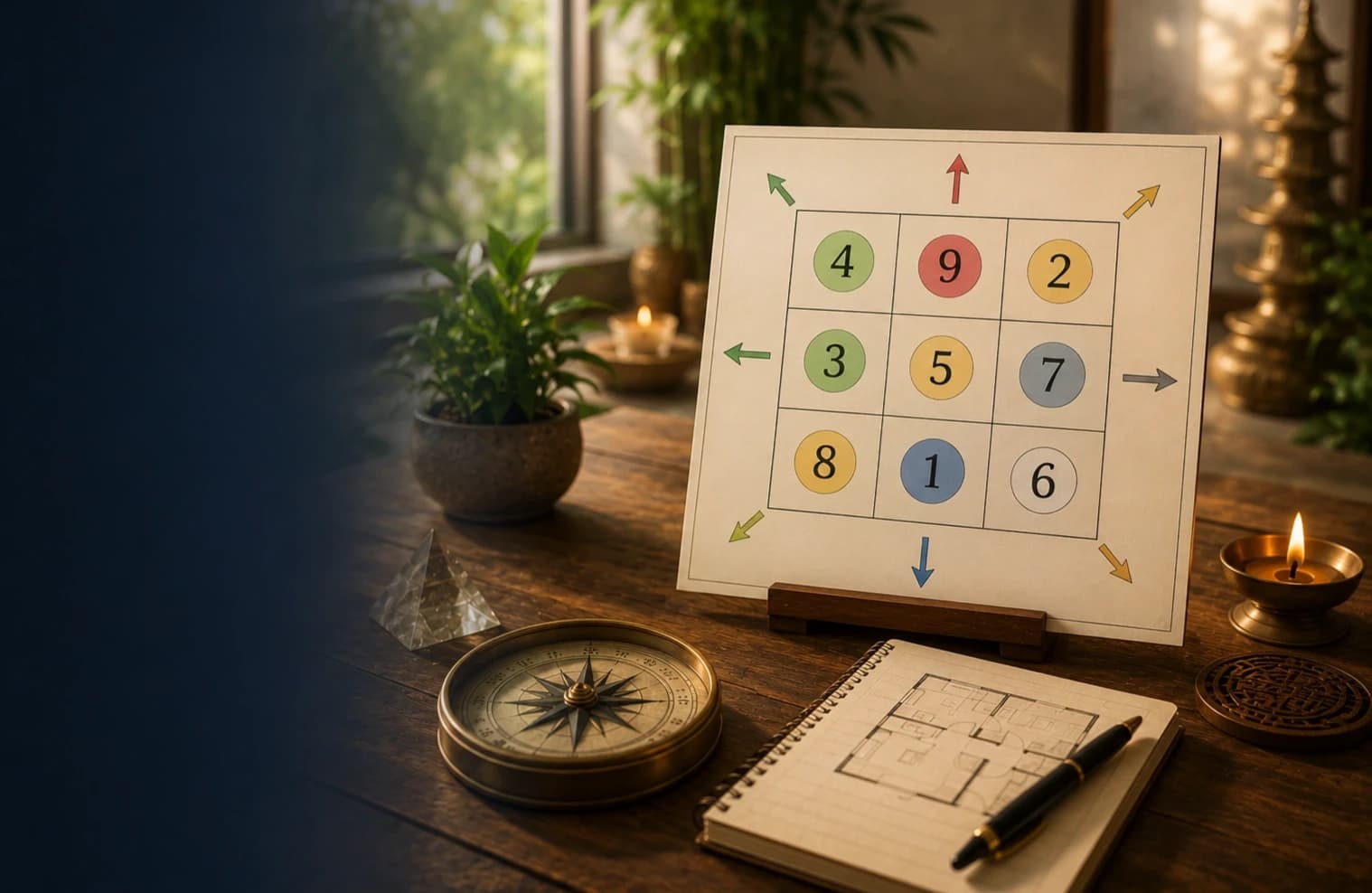
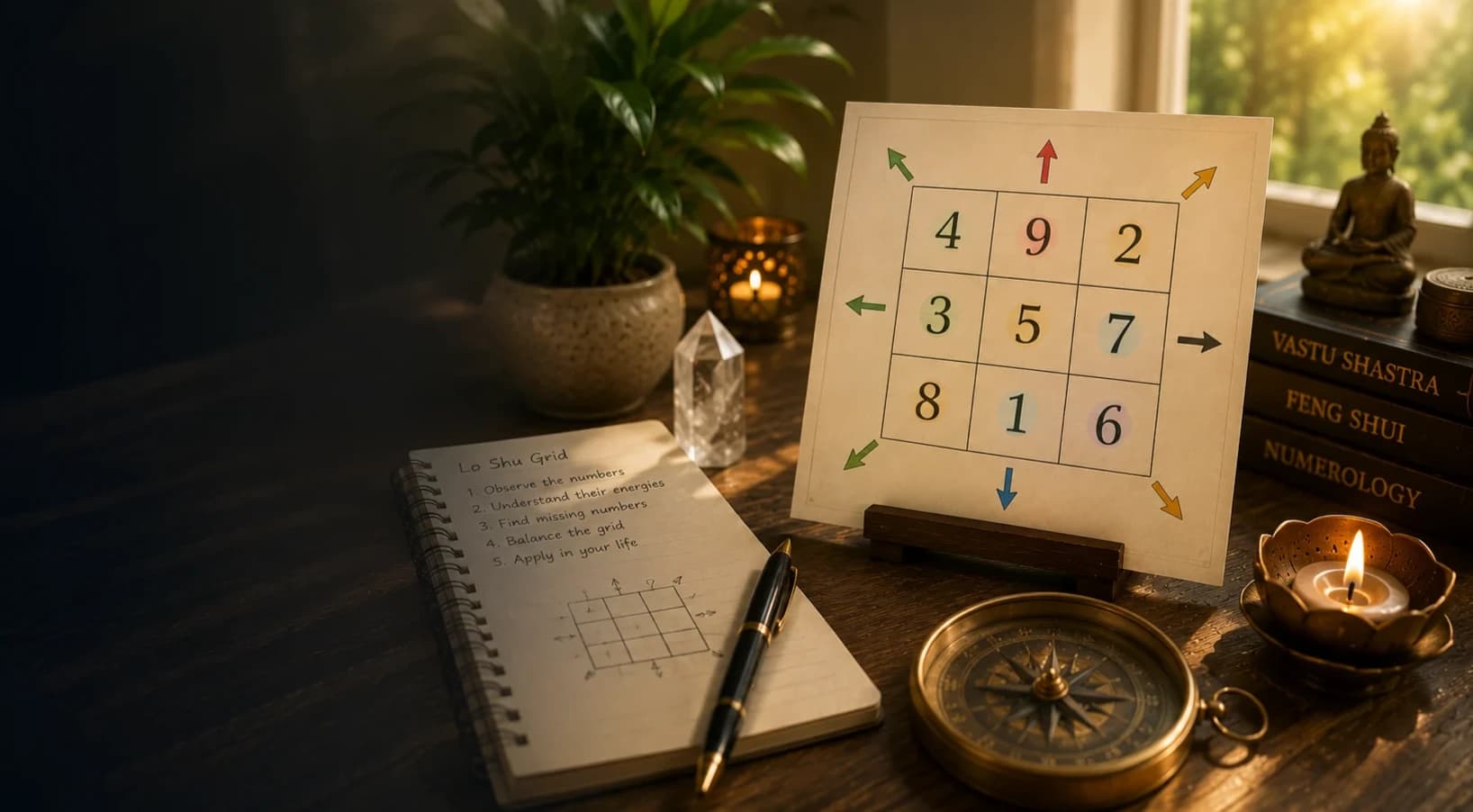
The traditional Lo Shu arrangement is usually represented like this:
- 4 - 9 - 2
- 3 - 5 - 7
- 8 - 1 - 6
This arrangement is important because the positions are not random. The meaning of the grid depends on where each number sits relative to the others. Once the birth-date digits are placed into their corresponding positions, the numerologist begins to read the pattern.
If a number appears once, that tells one story. If it appears multiple times, that tells another. If it is absent completely, that tells yet another. This is why the grid feels so alive and layered compared with simpler number methods.
A beginner does not need to memorize every advanced arrow or grid school immediately. The first step is simply understanding that the Lo Shu Grid is a structured map of numbers 1 to 9, and your date of birth fills that structure in a unique way.
How to Make a Lo Shu Grid from Your Date of Birth
Making a Lo Shu Grid is not difficult once you understand the process. The most common beginner method works like this:
- Write your full date of birth in digits.
- Ignore separators such as slashes or dashes.
- Take each digit and place it into the grid position for that number.
- If a digit appears more than once, note that repetition in the same grid box.
- Usually the digit 0 is not placed into the grid because the working system focuses on numbers 1 to 9.
For example, suppose a person is born on 24-08-1992.
The digits are: 2, 4, 0, 8, 1, 9, 9, 2.
Ignoring 0 for the grid, the working digits become:
- 1 appears once
- 2 appears twice
- 4 appears once
- 8 appears once
- 9 appears twice
Then these digits are placed into their respective Lo Shu positions. This immediately gives a pattern. Some numbers are present. Some are repeated. Others are absent. That pattern becomes the basis of interpretation.
This is why many people enjoy the Lo Shu Grid. It makes numerology feel interactive and visible. You can actually see the structure instead of only hearing a description.
What Present Numbers Mean in the Grid
When a number appears in the Lo Shu Grid, it generally indicates that the corresponding energy is present in the person’s pattern. The exact interpretation depends on how the practitioner teaches the system, but the basic idea is simple: the number’s quality has some degree of natural expression.
A present number suggests that this trait, drive, or mode of functioning is available to the person. It may not always be perfectly balanced, but it is at least part of the individual’s natural pattern.
For beginners, the most important thing to understand is that presence does not automatically mean perfection. It only means the energy exists in some active form. A number appearing once may indicate a simple natural presence. A number appearing multiple times may suggest intensity, emphasis, excess, or amplification.
This is why the Lo Shu Grid is not only about whether a trait exists. It is also about how strongly it exists and how it interacts with the rest of the pattern.
What Missing Numbers Mean in the Grid
One of the most talked-about features of the Lo Shu Grid is the idea of missing numbers. If a number from 1 to 9 does not appear at all in the person’s birth-date pattern, it is treated as absent from the grid.
Beginners often become frightened when they hear the phrase “missing number,” but this should be approached with maturity. A missing number does not mean the person is defective or doomed. It usually suggests that the corresponding quality is not naturally strong, is less readily available, or may require more conscious effort to develop.
In other words, missing numbers are often read as growth areas, imbalances, or less instinctive traits. Sometimes they show where a person feels uncomfortable, incomplete, underconfident, or compelled to learn through life experience.
For many readers, this is one of the most helpful things about the Lo Shu Grid. It does not only flatter. It shows where conscious development may be needed.
However, wise interpretation is important. A missing number should not be treated like a curse. It is better understood as a lesson area or a developmental gap, not as a permanent life sentence.
What Repeated Numbers Mean in the Grid
Just as missing numbers matter, repeated numbers matter too. If a digit appears multiple times in the birth date, then that number becomes more strongly emphasized in the grid.
A repeated number often suggests that the associated quality is intensified. But intensity is not always simple. It can mean strength, talent, force, sensitivity, excess, stubbornness, or overexpression depending on the number and the total pattern.
For example, a number appearing twice or three times may indicate that the person naturally carries more of that energy than average. In healthy expression, this may become a strength. In imbalanced expression, it may become overdrive, rigidity, emotional exaggeration, or a blind spot.
This is why Lo Shu Grid reading is not merely about presence and absence. It is about proportion. Some energies may be missing. Some may be moderate. Some may be dominant. Reading the grid well means understanding this balance.
How the Grid Is Used for Personality Reading
The Lo Shu Grid is especially powerful for personality pattern analysis. This is one of the reasons it has become so popular with modern readers. Instead of giving one flat personality label, it allows the numerologist to examine multiple structural tendencies at once.
In a personality reading, the grid may help highlight:
- natural confidence or insecurity
- mental style and clarity
- emotional expression or suppression
- practical discipline
- inner balance or imbalance
- behavioral repetition
- growth areas that require conscious attention
This is why many people say the Lo Shu Grid feels surprisingly accurate. It does not only say what a person is good at. It also shows what may feel uneven, underdeveloped, or overemphasized.
For self-awareness work, this can be incredibly useful. A person may realize that a pattern they thought was random is actually visible in the way their grid is structured. That does not prove fate in a mechanical sense, but it can provide a strong symbolic mirror.
Mental, Emotional, and Practical Patterns in the Grid
Many Lo Shu Grid teachers explain the system by grouping numbers into patterns that reflect different planes of functioning. Although exact teaching styles vary, beginners often encounter ideas such as mental, emotional, and practical patterns within the grid.
This is part of what makes the grid feel more layered than simple number reduction. It suggests that the person is not only carrying isolated traits, but also a pattern of balance or imbalance across different parts of life.
For example, some grid interpretations emphasize:
- how a person thinks
- how a person feels
- how a person acts in material life
These ideas should be learned gradually. A beginner does not need to force all advanced row and arrow meanings immediately. The first step is simply noticing that the Lo Shu Grid is trying to show not just traits, but relationships between traits.
That is where the real depth begins.
Why the Lo Shu Grid Is So Popular with Beginners
The Lo Shu Grid is beginner-friendly for several reasons.
First, it is visual. Many people learn faster when they can see a pattern rather than only hear a description.
Second, it feels personal without being overly technical. Your own date of birth creates your own grid, and that immediately makes the system engaging.
Third, it offers both strength and challenge. It does not only say nice things. It also reveals gaps and imbalances, which makes the reading feel deeper and more honest.
Fourth, it fits very well into modern self-awareness culture. People want to understand why certain tendencies repeat in their relationships, habits, emotions, or life decisions. The Lo Shu Grid gives them a structured symbolic way to explore those questions.
This is why many readers who find standard one-number numerology too shallow become very interested in the Lo Shu Grid once they are introduced to it properly.
Can the Lo Shu Grid Be Used with Other Numerology Systems?
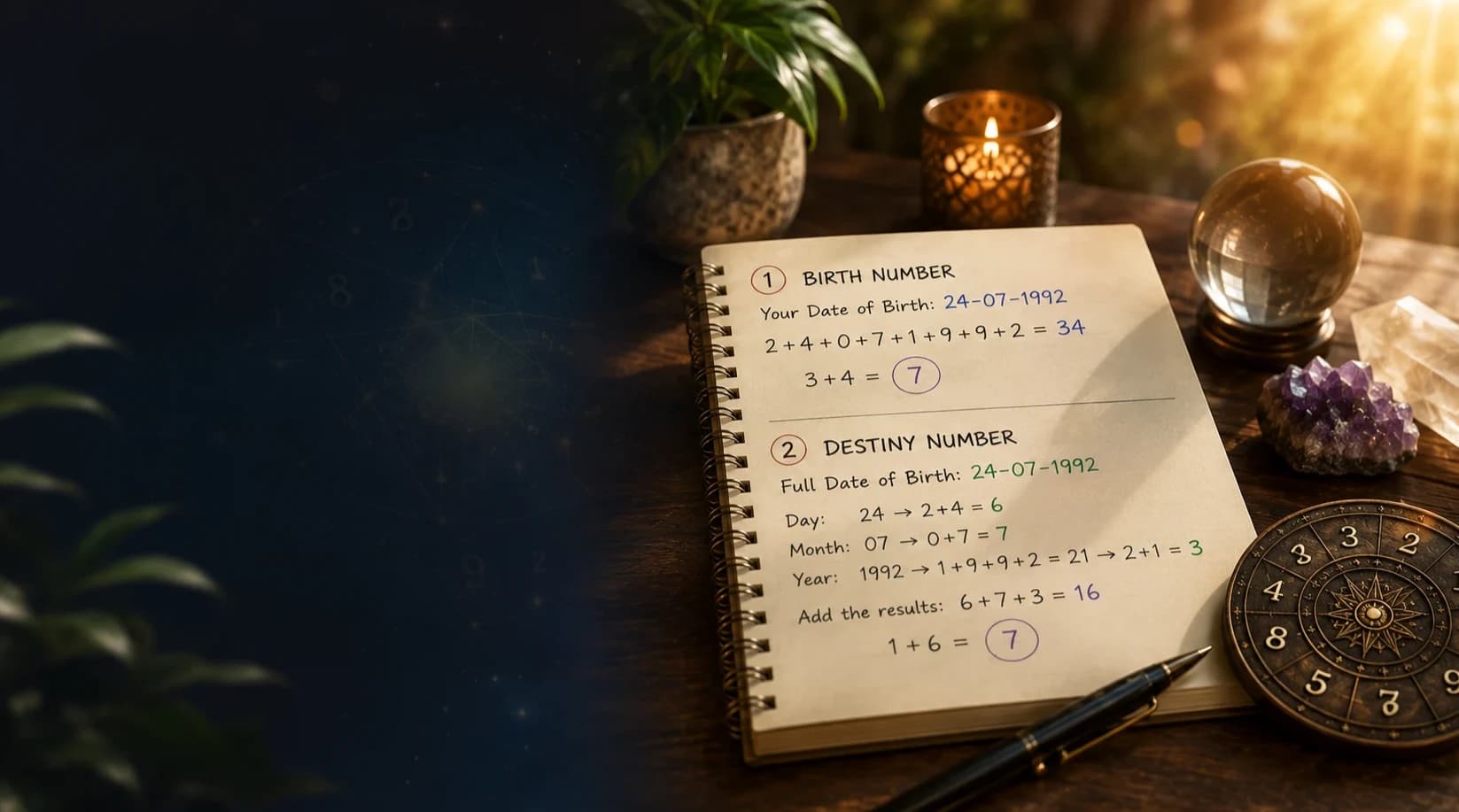
Yes. In fact, many numerologists combine the Lo Shu Grid with other systems such as Birth Number, Destiny Number, and Name Number reading. This can create a much richer interpretation.
For example:
- Birth Number may explain the person’s immediate personality tone.
- Destiny Number may show the larger life path.
- Lo Shu Grid may reveal structural strengths, missing energies, and internal imbalance.
These systems do not have to compete. They can complement one another, provided the practitioner understands that they are not doing exactly the same job.
The mistake beginners sometimes make is assuming that all numerology systems must produce identical answers. That is not how symbolic systems work. Different systems illuminate different layers of the person.
So yes, the Lo Shu Grid can absolutely be used alongside Indian or Vedic numerology approaches. But it should be used consciously, not mixed randomly.
Common Beginner Mistakes When Reading the Lo Shu Grid
As with any symbolic system, beginners often make a few predictable mistakes:
- treating missing numbers as fatal flaws
- assuming repeated numbers are automatically positive
- trying to memorize advanced arrows too early
- confusing Lo Shu Grid with Birth Number numerology
- expecting one pattern to explain the entire personality
- learning only through fear-based online posts
Another very common mistake is overconfidence. A beginner may see one missing number and jump to a dramatic conclusion about the whole life. That is not good reading. A number pattern should always be interpreted in context.
The grid is most useful when approached with patience. It is a reflective tool, not a fear machine.
How Beginners Should Start Learning the Lo Shu Grid
If you are just beginning, the best way to learn the Lo Shu Grid is through a simple sequence:
- Learn the fixed 3×3 number arrangement.
- Make your own grid from your date of birth.
- Identify present numbers, repeated numbers, and missing numbers.
- Reflect on whether those patterns match your experience honestly.
- Only then begin studying rows, columns, and deeper interpretive structures.
This order matters. If you jump straight into advanced interpretations without first understanding the basic pattern, the system may feel more confusing than helpful.
A beginner does not need to become an expert overnight. The first goal is simply to understand how the grid is built and why it is meaningful.
Once that is clear, the Lo Shu Grid becomes much less intimidating and much more useful.
What the Lo Shu Grid Can and Cannot Do
The Lo Shu Grid can be a very powerful symbolic tool. It can help you understand pattern, balance, strengths, gaps, and tendencies. It can support self-awareness. It can give language to things you may already feel but have never organized clearly.
But it is important to stay mature in how you use it.
The Lo Shu Grid can:
- highlight tendencies
- show structural imbalances
- support reflection and personal growth
- help interpret recurring behavioral patterns
The Lo Shu Grid cannot:
- replace common sense
- act as automatic proof of destiny
- fully explain a human being through one feature alone
- remove the need for maturity in interpretation
Used wisely, it is insightful. Used blindly, it becomes superstition. That balance matters.
Final Thoughts on What the Lo Shu Grid Is
The Lo Shu Grid is best understood as a pattern-based numerology system rooted in Chinese symbolic number structure and widely used today for personality, balance, and self-awareness reading. It is not the same as standard Birth Number numerology, though it can be used alongside it very effectively.
Its strength lies in its visual clarity and structural richness. By showing which numbers are present, repeated, or missing, it offers a nuanced way to study how different energies may be expressed or underdeveloped in a person’s life.
For beginners, the best approach is simple: learn the structure, make the grid, observe the pattern, and then deepen the interpretation slowly. Do not rush into fear-based conclusions. Let the grid become a mirror rather than a verdict.
If you have been wondering what the Lo Shu Grid really is, the simplest answer is this: it is a visual numerology map created from your date of birth that helps reveal strengths, gaps, tendencies, and personality balance in a structured way.
That is why so many readers find it fascinating. It does not only tell you a number. It shows you a pattern.
Editorial insight
The Lo Shu Grid becomes powerful the moment you stop asking only which number is good or bad and start asking what the overall pattern is trying to reveal. That is where numerology shifts from label-reading to structure-reading.
- My Destiny Path Editorial Team
Real-Life Case Study
A beginner once approached the Lo Shu Grid after feeling dissatisfied with simple one-number readings. She had already been told her Birth Number, but it never seemed to explain why some parts of her personality felt strong while other parts felt strangely absent. When her Lo Shu Grid was mapped, the experience became much more meaningful. She could see that certain energies were strongly repeated in her birth pattern while others were missing entirely. For the first time, numerology did not feel like a generic personality label. It felt like a structure she could observe, reflect on, and work with. That shift from “I am just this number” to “I have this pattern” is often what makes the Lo Shu Grid so illuminating for beginners.