

Why So Many People Get Confused About Numerology Systems
For many readers, numerology becomes confusing before it becomes useful. Someone searches for their lucky number and finds one website talking about Birth Number and Destiny Number. Another numerologist speaks about name correction and compound numbers. Then someone else introduces the Lo Shu Grid and says missing numbers in a square can reveal strengths, emotional patterns, and karmic imbalances. At that point, the beginner naturally wonders: Are these all the same system, or are they completely different?
The confusion grows because online content often mixes several traditions without clearly explaining their roots. Some writers use “Vedic Numerology” and “Indian Numerology” as if they are identical. Others use “Indian Numerology” very broadly, including multiple methods under one umbrella. Some numerologists combine Chaldean name methods with Indian birth-number reading and still present it as one simple system. And then the Lo Shu Grid enters the conversation with a very different structure, drawing from Chinese number philosophy rather than Indian astrological logic.
This is exactly why beginners need a proper foundation before moving into number meanings, lucky dates, compatibility, business names, or remedies. Without understanding the system itself, it is easy to get contradictory advice. You may calculate one number in one system and get a certain reading, then calculate something else in another system and feel that the results are not matching. In many cases, the problem is not that numerology is inconsistent. The problem is that different systems are answering different questions in different ways.
This article is designed to remove that confusion. It explains what Vedic Numerology is, what people usually mean when they say Indian Numerology, what the Lo Shu Grid actually is, how these systems differ, where they overlap, which one is better for which kind of question, and how readers can choose the right method without getting overwhelmed.
The goal here is not to create unnecessary technical complexity. The goal is clarity. Once you understand the differences between these systems, numerology becomes much easier to use wisely.
What Is Vedic Numerology?
Vedic Numerology is a number-based interpretive system used in the Indian spiritual and astrological tradition. In practice, it usually connects numbers with planetary influences, karmic patterns, temperament, life direction, and destiny themes. It is especially popular among readers who already have some familiarity with Jyotish, because Vedic Numerology often feels naturally aligned with the broader Indian spiritual worldview.
In this approach, numbers are not seen as random quantities. They are treated as carriers of subtle vibration and symbolic meaning. These meanings are often connected with grahas, karmic lessons, personality tendencies, strengths, weaknesses, timing patterns, relationships, and practical life decisions.
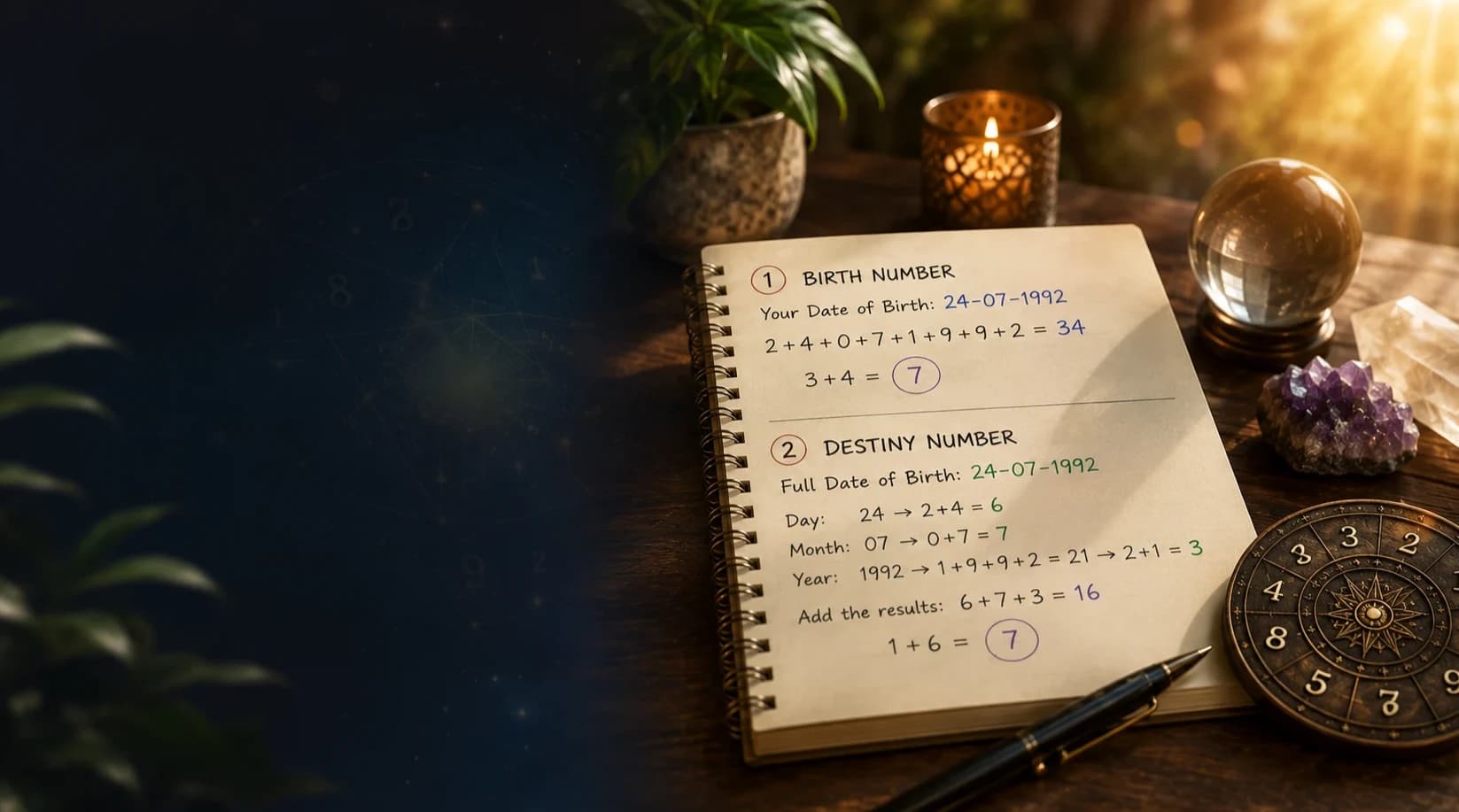
The two most commonly discussed foundation numbers in Vedic Numerology are:
- Birth Number or Moolank, usually derived from the day of birth
- Destiny Number or Bhagyank, usually derived from the full date of birth
These numbers are then interpreted to understand the person’s essential nature, life-path tendency, decision style, compatibility, career inclination, and the broader karmic atmosphere surrounding their life journey.
In many Indian numerology practices, numbers 1 to 9 are linked symbolically with planets. For example, different practitioners may associate certain numbers with the Sun, Moon, Jupiter, Saturn, and so on. This makes Vedic Numerology feel more spiritually integrated for readers who also use astrology as part of their life guidance.
However, it is important to understand that the phrase “Vedic Numerology” is sometimes used broadly in modern teaching. Not every teacher uses the same technical framework. Some blend classical Indian symbolism with modern numerology teaching methods. So when a reader hears “Vedic Numerology,” the practical meaning is often: an Indian number-reading method rooted in planetary symbolism, karma, destiny patterns, and spiritual interpretation.
What Is Indian Numerology?
Indian Numerology is a broader umbrella term. This is one of the main reasons people get confused. In practical usage, Indian Numerology often refers to the numerology traditions commonly practiced in India, taught by Indian numerologists, or adapted for Indian spiritual and cultural use.
Sometimes this means almost the same thing as Vedic Numerology. Sometimes it includes systems that are not strictly Vedic in origin but have been absorbed into modern Indian numerology practice. In many real-world cases, “Indian Numerology” may include a mix of:
- Birth Number and Destiny Number interpretation
- planet-number correspondences
- name numerology
- lucky dates and favorable timings
- compatibility reading
- business, mobile number, vehicle number, and house number guidance
- sometimes Chaldean or adapted alphabet-number methods
So when someone says “Indian Numerology,” they may not be referring to one narrow, tightly defined historical system. They may be referring to the larger Indian numerology ecosystem as it is practiced today.
This is why some people say “Vedic Numerology” and “Indian Numerology” as if they are separate, while others use them interchangeably. In strict spiritual branding, “Vedic Numerology” sounds more rooted in the Vedic worldview. In practical modern usage, “Indian Numerology” often functions as the wider category that includes Vedic-style number reading along with applied Indian numerology methods used in everyday life.
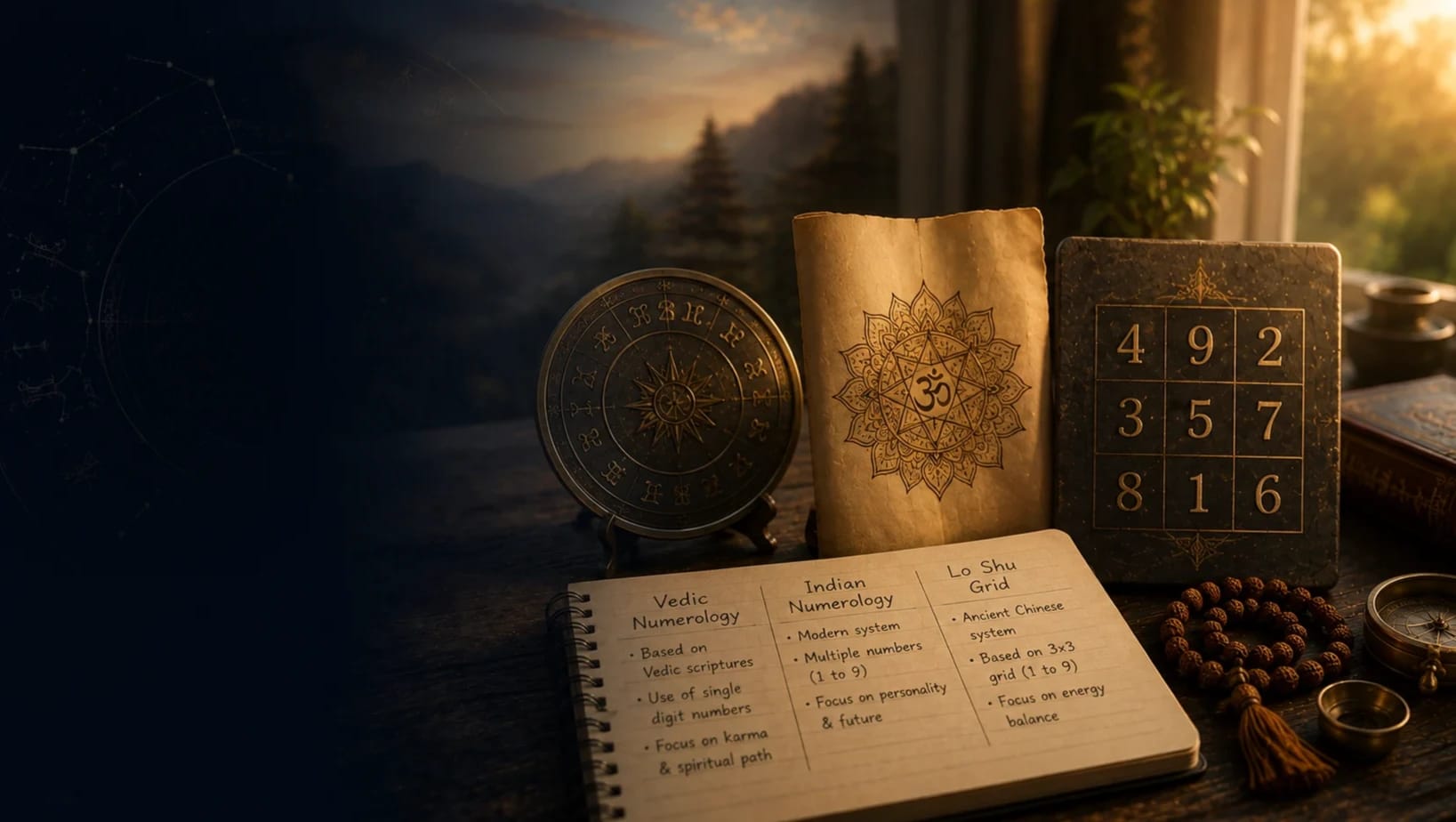
So the most accurate beginner understanding is this: Vedic Numerology is usually a spiritually framed, planetary, karma-linked Indian number system, while Indian Numerology is often the broader modern umbrella under which several Indian-style number methods are taught and applied.
Is There a Real Difference Between Vedic and Indian Numerology?
This is one of the most important questions, because many readers assume these two terms must describe completely different systems. In practice, the answer is: sometimes yes, sometimes not very much.
In many modern websites, books, consultations, and YouTube explanations, the two terms are used interchangeably. A numerologist may say “Vedic Numerology” to emphasize spiritual depth, planetary logic, or alignment with Indian tradition. Another may say “Indian Numerology” while using almost the same birth-number and destiny-number framework.
But there can still be a useful distinction:
- Vedic Numerology usually suggests a stronger emphasis on spiritual symbolism, karma, and planetary alignment.
- Indian Numerology often refers more broadly to the numerology methods commonly used in India today, including practical applied number reading in names, dates, business, and daily-life decisions.
So if a reader is asking whether Vedic Numerology and Indian Numerology are enemies or contradictory systems, the answer is no. They overlap heavily. The relationship is closer to “specific stream versus broader umbrella” than to “completely unrelated schools.”
This matters because readers should not panic if one source says Vedic Numerology and another says Indian Numerology. Often they are speaking from slightly different framing styles, not radically different metaphysical worlds.
What Is the Lo Shu Grid?
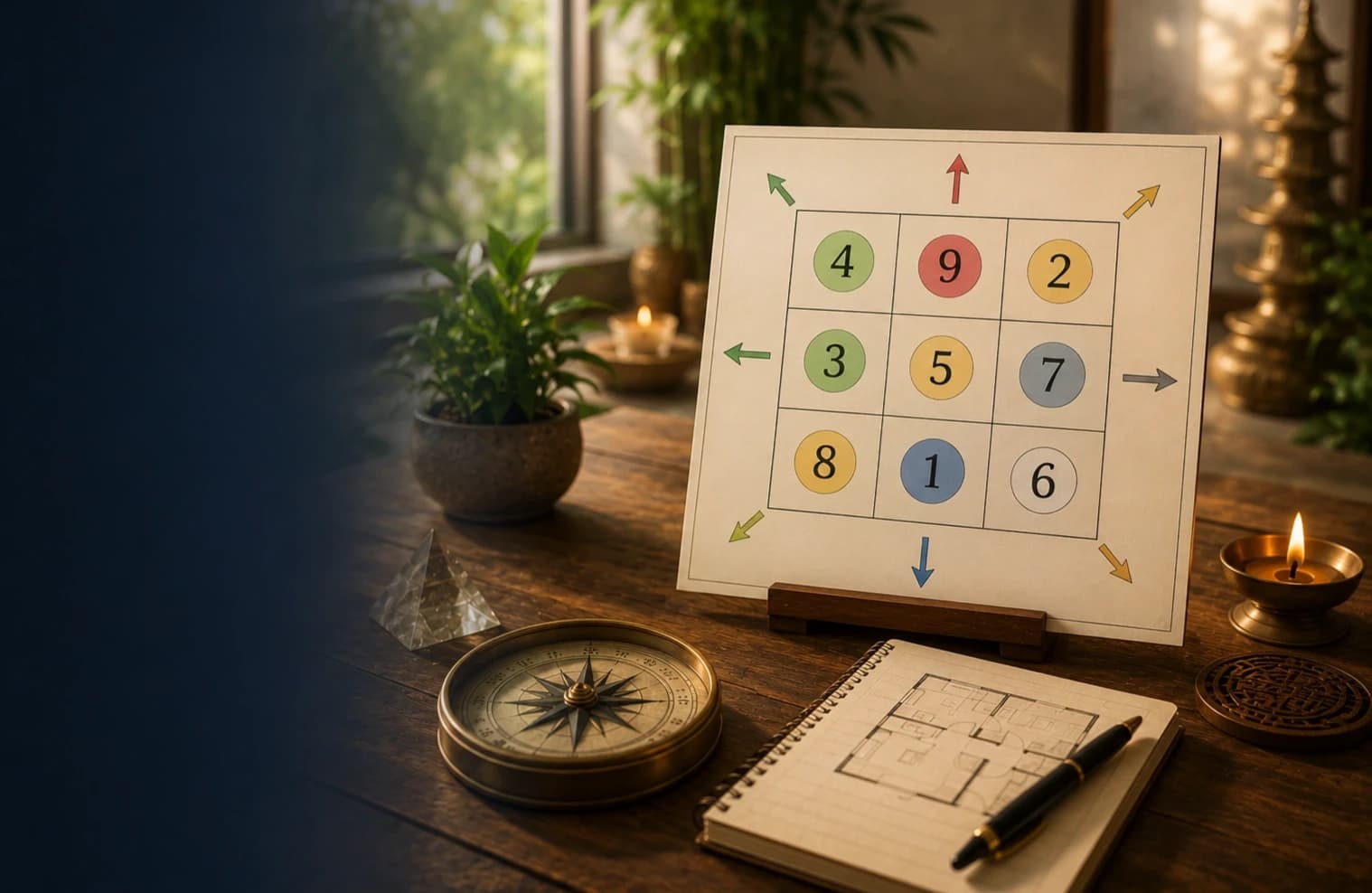
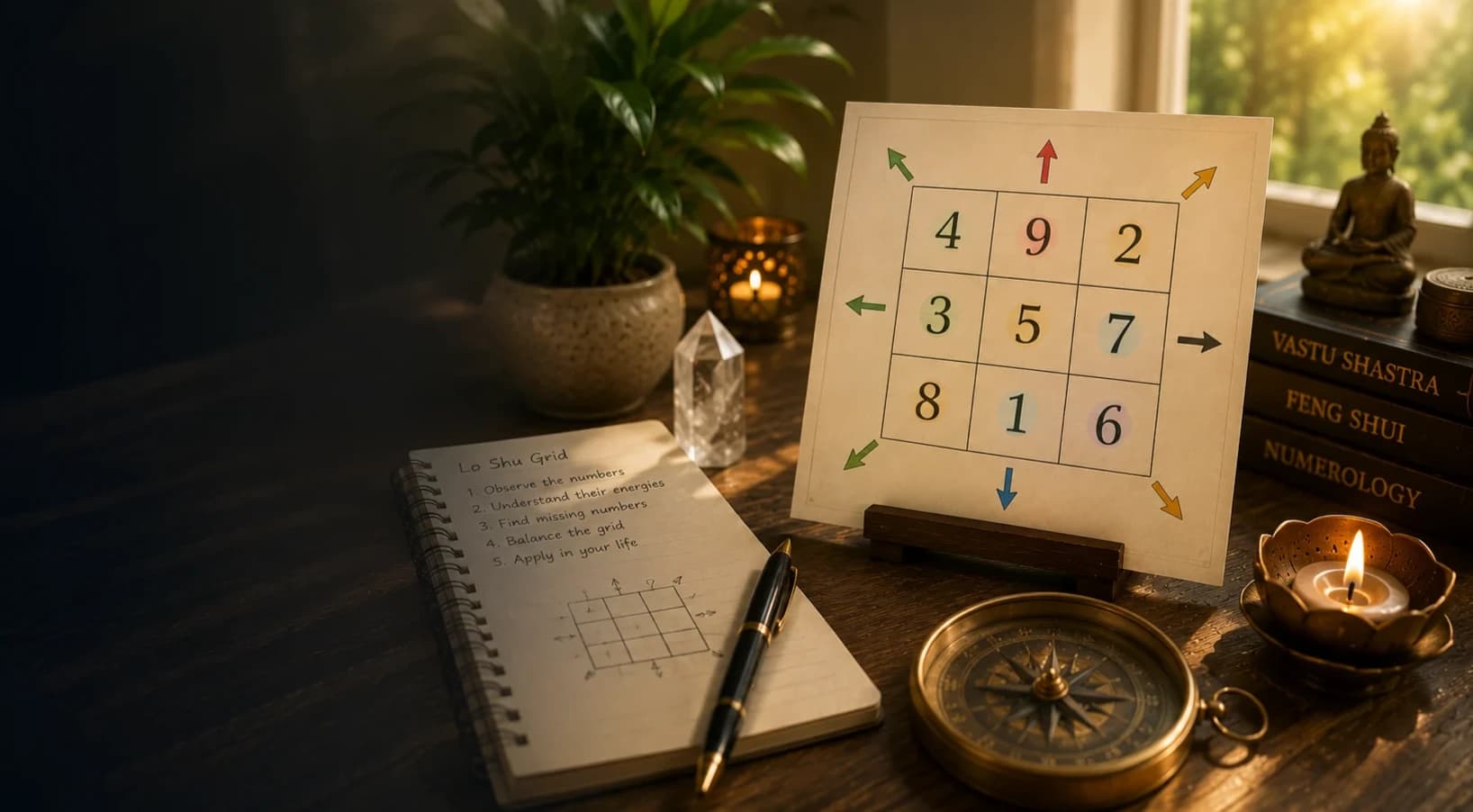
The Lo Shu Grid is a very different numerology approach from the ones most beginners first meet in Indian spiritual circles. It is based on a Chinese numerological model built around a 3×3 number grid, traditionally associated with patterns of order, balance, and energy distribution.
In modern practice, the Lo Shu Grid is typically built from the date of birth by placing the birth-date digits into their respective number positions in the grid. Once the grid is filled, numerologists interpret:
- which numbers are present
- which numbers are repeated
- which numbers are missing
- which horizontal, vertical, or diagonal patterns are formed
The Lo Shu approach is often highly visual. Instead of focusing first on a single Birth Number or Destiny Number, it examines the pattern of number distribution across the full grid. This makes it especially attractive to readers who want a personality-structure reading rather than only one-number interpretation.
In many consultations, the Lo Shu Grid is used to study:
- personality balance
- mental, emotional, and practical tendencies
- strengths and missing qualities
- habit patterns
- relationship challenges
- emotional processing style
- personal development focus
Unlike Vedic-style number reading, Lo Shu Grid interpretation does not begin from planetary symbolism in the same way. Its starting point is pattern structure, not graha-based karmic mapping. That is one of the most important differences to understand.
How the Lo Shu Grid Works in Practice
To build a Lo Shu Grid, a numerologist typically takes the digits from the date of birth and places them into the corresponding boxes of the grid. For example, if a date of birth contains multiple 1s, 2s, or 8s, those numbers will appear more strongly in the pattern. If certain numbers do not appear at all, those are treated as missing energies or underdeveloped themes.
This creates a reading style that feels very different from the standard Birth Number and Destiny Number approach. Instead of saying, “You are a Number 1, so this is your essential nature,” the Lo Shu Grid asks something like:
- Which energies are overrepresented?
- Which are absent?
- Is there mental balance?
- Is there emotional strength?
- Is the practical axis strong or weak?
- What patterns repeat strongly in the personality?
This is why readers often find Lo Shu Grid fascinating. It feels structured, specific, and visually revealing. At the same time, it is not the same thing as Vedic Numerology or broader Indian birth-number numerology. It answers somewhat different questions through a different symbolic language.
Difference in Origin and Philosophy
One of the clearest ways to understand these systems is by looking at their origin and philosophical tone.
Vedic Numerology is usually presented within an Indian spiritual worldview. It often feels karmic, planetary, symbolic, and dharmic. It is closer in tone to astrology, because it often treats numbers as carriers of cosmic influence and life-pattern meaning.
Indian Numerology, in broader usage, reflects the modern Indian numerology landscape. It may include Vedic elements, name correction practices, date selection, practical remedies, and blended interpretive methods. Its tone may be spiritual, practical, business-oriented, or remedial depending on the teacher.
Lo Shu Grid comes from a different cultural-philosophical stream. Its interpretive flavor is more pattern-based and structural. It focuses on how numbers distribute across the grid and what those formations suggest about the person’s balance, strengths, and missing traits.
So although all three are “numerology,” they are not simply different spellings of the same thing. Their symbolic foundations and interpretive emphasis are not identical.
Difference in Core Calculation Method
Another important difference lies in how these systems are calculated.
In Vedic Numerology and much of Indian Numerology, the most common starting point is numerical reduction. You take the date of birth, reduce the birth day to a number, reduce the full birth date to a destiny number, and then interpret those numbers. Name numerology may be added by converting letters into numerical values.
In Lo Shu Grid, the date of birth is not used only to reduce numbers into one or two totals. Instead, the digits are placed into a full grid pattern. The interpretation then depends on number presence, repetition, absence, and structural balance.
This means the systems feel different at the very first calculation stage:
- Vedic / Indian number reading often begins with “What is your core number?”
- Lo Shu Grid reading often begins with “What pattern does your date of birth create?”
That is a major methodological difference.
Difference in What Each System Reads Best
Each numerology system tends to shine in slightly different ways.
Vedic Numerology is often especially useful for:
- life-path orientation
- birth-number personality reading
- destiny themes
- planet-linked interpretation
- spiritual and karmic framing
- favorable timing and vibration alignment
Indian Numerology in broader practical use is often very strong for:
- name correction
- lucky dates
- business naming
- mobile and vehicle number advice
- relationship compatibility
- practical life applications
Lo Shu Grid is often especially effective for:
- personality structure analysis
- strengths and weaknesses
- missing number interpretation
- repeated number pattern reading
- self-awareness and development themes
- behavioral balance and personal pattern recognition
This does not mean one system is “true” and the others are “false.” It means they are often better suited to different reader needs.
Which System Is Better for Beginners?
For most new readers, the easiest place to begin is usually Birth Number and Destiny Number reading through a Vedic or Indian numerology framework. The reason is simple: it is conceptually easier. You calculate one or two core numbers, understand the meaning of numbers 1 to 9, and begin to see how number symbolism works.
The Lo Shu Grid is also beginner-friendly in a different way, but it usually works best after the reader understands that numerology is not just about “lucky number” culture. The grid adds a second layer of structure and can feel more meaningful once the beginner has some comfort with number symbolism.
So if you are guiding complete beginners, the best teaching sequence is often:
- Explain what numerology is.
- Teach Vedic / Indian basics such as Birth Number and Destiny Number.
- Then introduce Lo Shu Grid as a pattern-based complementary system.
This keeps the learning curve gentle while still giving depth later.
Can You Use These Systems Together?
Yes, and in practice many numerologists do exactly that. A person may receive a reading that includes:
- Birth Number
- Destiny Number
- Name Number
- Lo Shu Grid analysis
That does not automatically make the reading confused. In fact, if done carefully, it can make the reading richer. The key is not to pretend that all methods are identical. The key is to know what each system is contributing.
For example:
- Birth Number may describe core personality tone.
- Destiny Number may describe life direction and longer path.
- Name Number may speak to public vibration, branding, or expression.
- Lo Shu Grid may reveal structural strengths, missing traits, and personality balance.
When the systems are combined consciously, they can complement one another rather than compete.
Common Beginner Mistakes When Comparing These Systems
There are a few mistakes readers make again and again when trying to compare Vedic Numerology, Indian Numerology, and Lo Shu Grid:
- assuming all systems must produce the exact same type of result
- thinking contradiction means one of them is fake
- not checking which method the numerologist is actually using
- mixing multiple systems without understanding the role of each
- treating broad “Indian Numerology” as a single rigid formula
- expecting Lo Shu Grid to behave like Birth Number numerology
The better approach is to ask: What is this system designed to show? Once you ask that question, the confusion reduces sharply.
How to Choose the Right System for Your Question
If your question is spiritual, karmic, or life-path oriented, Vedic Numerology may feel more natural and meaningful.
If your question is practical and application-based— such as naming, business vibration, compatibility, favorable dates, or number correction— Indian Numerology in its modern applied form may be especially useful.
If your question is pattern-based— such as understanding your strengths, weak spots, emotional gaps, repeated tendencies, or missing-number lessons— the Lo Shu Grid may be particularly insightful.
So the best system depends on the question. This is a far more intelligent way to choose than asking which system is “best” in the abstract.
Final Thoughts: What Is the Real Difference?
The real difference between Vedic Numerology, Indian Numerology, and Lo Shu Grid is not that one is right and the others are wrong. The real difference lies in their origin, interpretive language, calculation style, and best use-case.
Vedic Numerology is usually more spiritually framed and closely tied to planetary symbolism and karmic logic. Indian Numerology is often the broader practical field within which multiple Indian methods are used today. Lo Shu Grid is a distinct pattern-based numerology model rooted in a different tradition and especially useful for structural personality reading.
For readers, the most helpful thing is not to collapse all three into one vague category called “number reading.” Instead, understand what each system is designed to reveal. Once you do that, numerology becomes much clearer, more useful, and far less contradictory.
If you are just beginning, start simple. Learn your Birth Number and Destiny Number first. Then explore how Lo Shu Grid adds another layer of pattern insight. When the systems are understood properly, they do not create confusion. They create depth.
Editorial insight
The confusion disappears the moment a reader understands that Vedic Numerology, Indian Numerology, and Lo Shu Grid are not identical tools pretending to be different. They are different interpretive lenses. Each one reveals a different layer of number wisdom when used in the right context.
- My Destiny Path Editorial Team
Real-Life Case Study
A reader once came in feeling frustrated because one numerologist had told her to focus on her Birth Number and Destiny Number, while another spent most of the consultation explaining missing numbers in her Lo Shu Grid. She thought one of them had to be wrong. But once the systems were explained properly, the contradiction disappeared. The first reading was using an Indian numerology framework to explain life direction and number vibration. The second was using Lo Shu Grid to highlight personality balance and emotional-development themes. Neither reading had failed. They were simply using different systems to answer different kinds of questions. Once she understood that, numerology stopped feeling inconsistent and started feeling layered. That is exactly why system clarity matters so much for beginners.
Key terms in this article
- House
- A life area in the birth chart, such as marriage, career, wealth, home, or health.