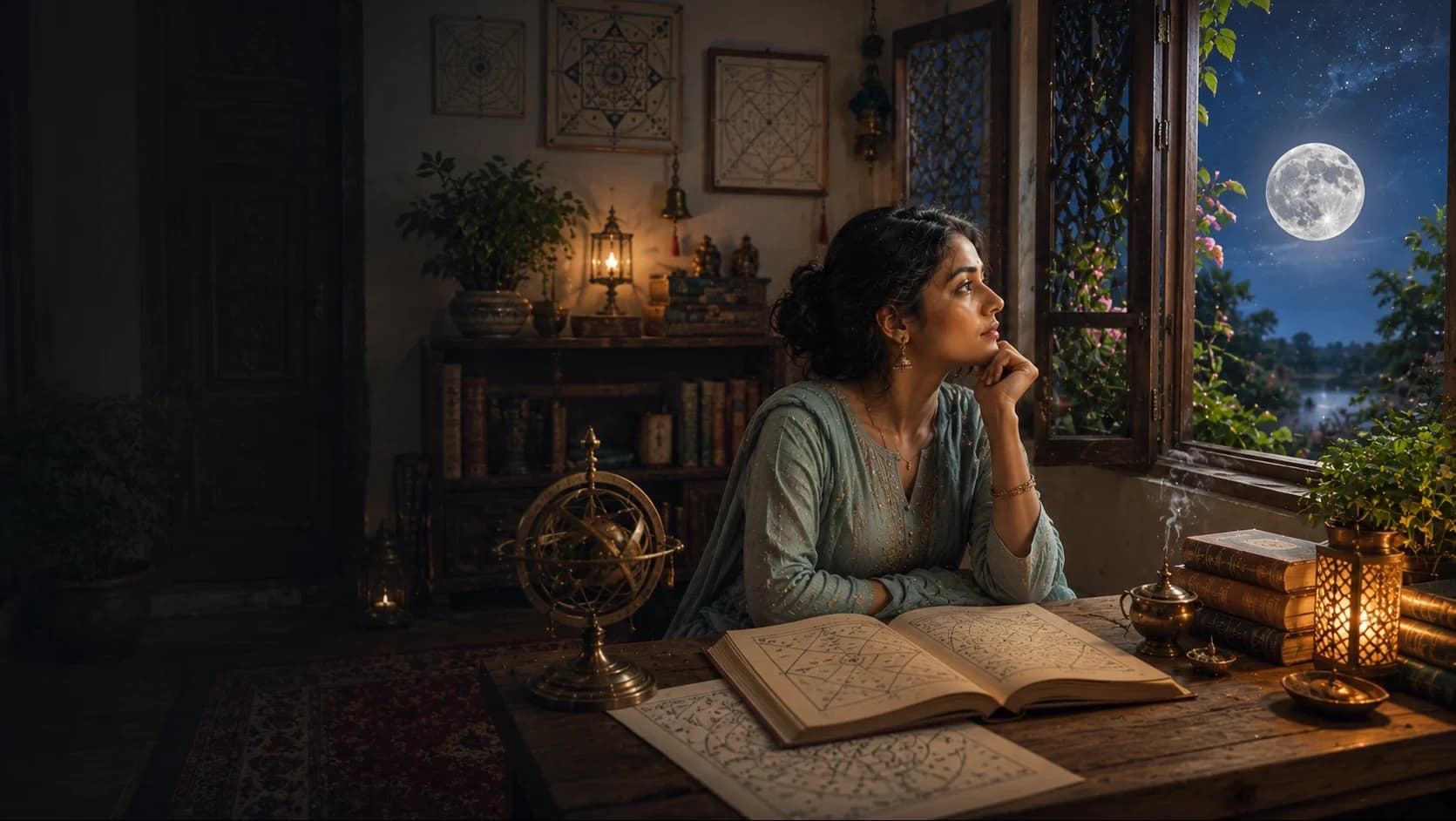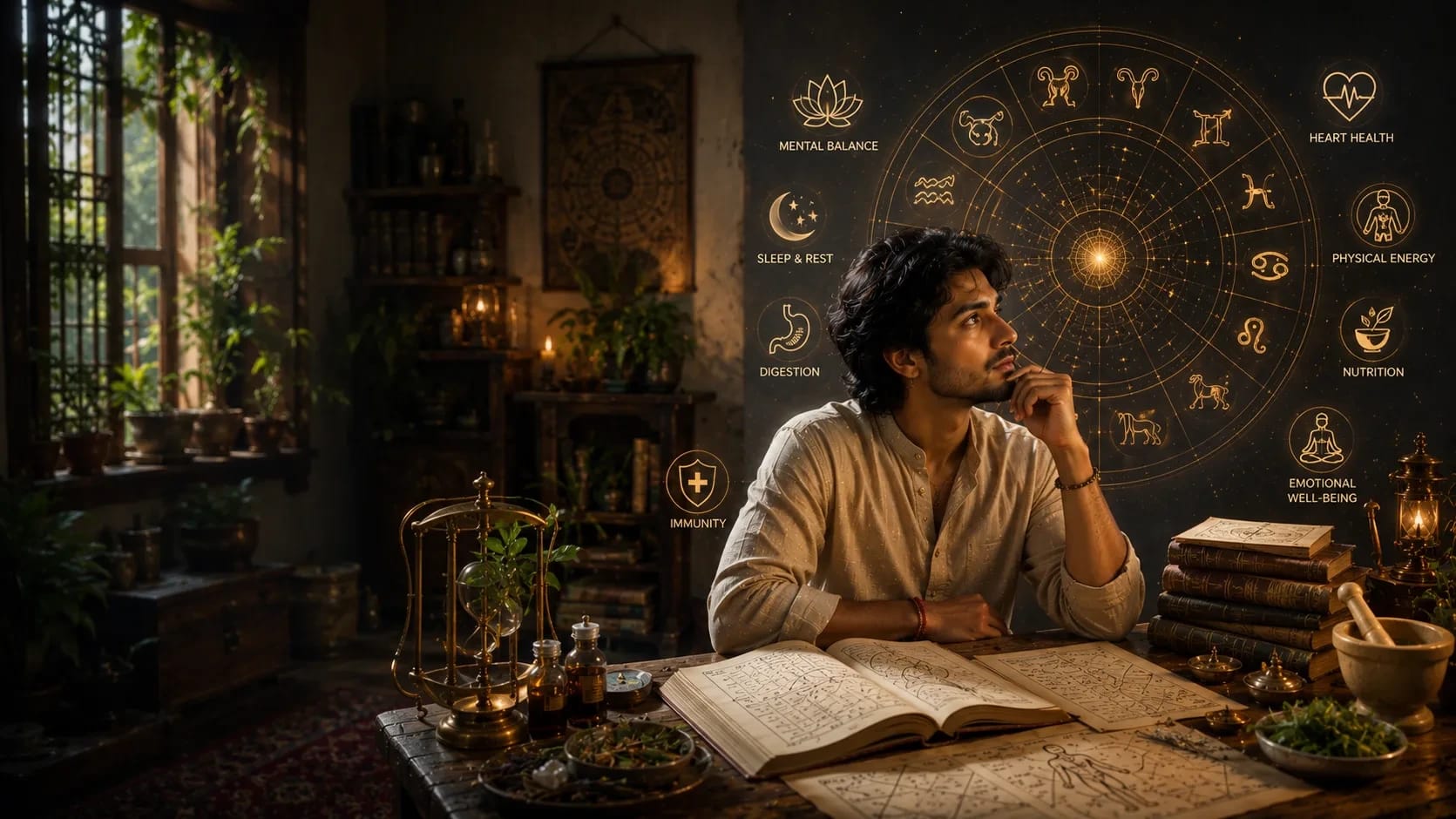


स्वास्थ्य और जीवनशैली समझने के लिए लोग ज्योतिष की ओर क्यों देखते हैं
स्वास्थ्य जीवन का बहुत निजी विषय है। व्यक्ति केवल यह नहीं जानना चाहता कि वह “स्वस्थ” है या “अस्वस्थ”। वह यह भी समझना चाहता है कि कुछ समय भारी क्यों लगता है, कभी तनाव क्यों बढ़ता है, ऊर्जा क्यों घटती-बढ़ती है, नींद क्यों बिगड़ती है, दिनचर्या क्यों टूटती है और भावनात्मक दबाव कभी-कभी पूरे शरीर पर असर करता हुआ क्यों महसूस होता है।
इसी कारण कई लोग ज्योतिष की ओर देखते हैं। अधिकतर लोग डराने वाली भविष्यवाणी नहीं चाहते। वे एक पैटर्न समझना चाहते हैं। वे जानना चाहते हैं कि जन्मकुंडली शरीर की ऊर्जा, मानसिक स्थिरता, भावनात्मक प्रकृति, दैनिक लय, तनाव प्रतिक्रिया और अंदरूनी संतुलन के बारे में क्या संकेत देती है।
समझदारी और जिम्मेदारी के साथ उपयोग किया जाए तो ज्योतिष स्व-जागरूकता दे सकता है। यह प्रवृत्तियों, संवेदनशील समय, दबाव के चरणों और जीवनशैली की असंतुलित आदतों की ओर संकेत कर सकता है। लेकिन ज्योतिष डॉक्टर, जांच, उपचार, दवा या आपातकालीन चिकित्सा का विकल्प नहीं है।
इस लेख में हम देखेंगे कि स्वास्थ्य और जीवनशैली के विषय में ज्योतिष जिम्मेदारी से क्या कह सकता है, क्या नहीं कहना चाहिए, कौन-से भाव और ग्रह देखे जाते हैं, दशा-गोचर का क्या महत्व है और इसे डर के बजाय संतुलित जागरूकता के साधन की तरह कैसे उपयोग करें।
स्वास्थ्य और जीवनशैली के बारे में ज्योतिष क्या बता सकता है
ज्योतिष निम्न बातों पर उपयोगी संकेत दे सकता है:
- सामान्य जीवनशक्ति और सहनशक्ति
- तनाव के प्रति संवेदनशीलता
- भावनात्मक प्रतिक्रिया और मूड पैटर्न
- दिनचर्या बिगड़ने की प्रवृत्ति
- मानसिक बेचैनी या भारीपन
- ऐसे समय जब शरीर और मन अधिक आराम मांगते हैं
- जीवनशैली में अनुशासन या लापरवाही की प्रवृत्ति
- नींद, विश्राम और एकांत की जरूरत
यह संकेत किसी व्यक्ति को अपने शरीर और मन के साथ अधिक सजग बनने में मदद कर सकते हैं। उदाहरण के लिए, कुछ कुंडलियों में व्यक्ति काम का दबाव अधिक उठा लेता है, कुछ में भावनात्मक तनाव शरीर में जल्दी उतरता है, और कुछ में दिनचर्या टूटते ही ऊर्जा बहुत जल्दी गिरती है।
ज्योतिष का श्रेष्ठ उपयोग यह है कि वह व्यक्ति को सही प्रश्न पूछने में मदद करे: मैं किस तरह के दबाव में जल्दी थकता हूँ? मुझे किस प्रकार की दिनचर्या सहारा देती है? किस समय मुझे अधिक आराम और संयम की जरूरत हो सकती है?
स्वास्थ्य के बारे में ज्योतिष को क्या दावा नहीं करना चाहिए
स्वास्थ्य विषय में ज्योतिष की सीमा स्पष्ट रहनी चाहिए। कोई भी जिम्मेदार ज्योतिषीय लेख या सलाह यह दावा नहीं करनी चाहिए कि वह बीमारी का निश्चित निदान कर सकती है, दवा बता सकती है, डॉक्टर की सलाह को बदल सकती है या आपातकालीन स्थिति में निर्णय ले सकती है।
कुंडली में किसी ग्रह, भाव या दशा को देखकर “आपको यह रोग होगा” जैसे डराने वाले निष्कर्ष निकालना गलत और हानिकारक है। ज्योतिष संभावनाओं, प्रवृत्तियों और समय की गुणवत्ता पर संकेत देता है; यह मेडिकल टेस्ट नहीं है।
जरूरी सावधानी: यदि शरीर में गंभीर लक्षण हैं, दर्द है, सांस लेने में समस्या है, अचानक कमजोरी है, मानसिक संकट है या कोई पुरानी बीमारी बढ़ रही है, तो डॉक्टर या योग्य स्वास्थ्य विशेषज्ञ से तुरंत सलाह लें। ज्योतिष को केवल आत्म-जागरूकता और जीवनशैली अनुशासन के सहायक साधन की तरह रखें।
लग्न और शरीर की मूल प्रकृति
लग्न या Ascendant जन्मकुंडली का आरंभ बिंदु है। स्वास्थ्य के संदर्भ में यह शरीर की मूल बनावट, बाहरी ऊर्जा, जीवनशक्ति और व्यक्ति की प्राकृतिक प्रतिक्रिया शैली को समझने में मदद करता है।
मजबूत लग्न और लग्नेश सामान्यतः बेहतर रिकवरी क्षमता, शरीर की स्थिरता और आत्म-नियंत्रण का संकेत देते हैं। कमजोर या अधिक पीड़ित लग्न यह दिखा सकता है कि व्यक्ति को दिनचर्या, नींद, भोजन और तनाव प्रबंधन पर अधिक ध्यान देना चाहिए।
यहां भी निष्कर्ष संतुलित होना चाहिए। लग्न कोई बीमारी तय नहीं करता, बल्कि शरीर की “मूल प्रणाली” को समझने का प्रवेश द्वार देता है।
चंद्रमा और भावनात्मक स्वास्थ्य
चंद्रमा मन, भावनाओं, स्मृति, संवेदनशीलता और आंतरिक सुरक्षा की भावना से जुड़ा है। स्वास्थ्य के विषय में चंद्रमा यह बताता है कि व्यक्ति तनाव को भीतर कैसे ग्रहण करता है और भावनात्मक असंतुलन का असर नींद, भूख, ऊर्जा या शरीर पर कैसे पड़ सकता है।
मजबूत चंद्रमा भावनात्मक लचीलापन और स्थिरता देता है। अधिक पीड़ित चंद्रमा बेचैनी, मूड में उतार-चढ़ाव, अति-संवेदनशीलता या आराम की कमी की प्रवृत्ति दिखा सकता है। ऐसे व्यक्ति को नियमित नींद, शांत वातावरण, भावनात्मक संवाद और जल/चंद्र-संबंधी संतुलन से लाभ मिल सकता है।
सूर्य और जीवनशक्ति
सूर्य आत्मबल, जीवनी शक्ति, आत्मविश्वास और शरीर की मूल ऊर्जा से जुड़ा माना जाता है। स्वास्थ्य-ज्योतिष में सूर्य यह समझने में मदद करता है कि व्यक्ति अपनी ऊर्जा कैसे संभालता है, नेतृत्व और जिम्मेदारी का दबाव कैसे लेता है, और थकान के बाद फिर से उठने की क्षमता कैसी है।
संतुलित सूर्य आत्मविश्वास, स्पष्टता और नियमितता देता है। कमजोर या दबावग्रस्त सूर्य कभी-कभी कम आत्मबल, थकान या दिशा की कमी के रूप में दिख सकता है। इसका उपाय डर नहीं, बल्कि नियमित दिनचर्या, सूर्यप्रकाश, अनुशासन और आत्म-सम्मान को स्वस्थ तरीके से मजबूत करना है।
मंगल और शारीरिक ऊर्जा
मंगल शरीर की सक्रिय ऊर्जा, साहस, गति, मांसपेशीय बल, प्रतिस्पर्धा और कार्रवाई की क्षमता से जुड़ा है। स्वास्थ्य की दृष्टि से मंगल बताता है कि व्यक्ति ऊर्जा को कैसे बाहर निकालता है।
मजबूत मंगल व्यक्ति को सक्रिय, तेज और संघर्षशील बना सकता है। असंतुलित मंगल जल्दबाजी, चिड़चिड़ापन, तनाव में तीखी प्रतिक्रिया या ऊर्जा के गलत उपयोग का संकेत दे सकता है। ऐसे लोगों के लिए नियमित व्यायाम, धैर्य, सांस पर नियंत्रण और गुस्से को स्वस्थ दिशा देना उपयोगी हो सकता है।
शनि, दबाव, थकान और सहनशक्ति
शनि अनुशासन, देरी, जिम्मेदारी, सहनशीलता और लंबी अवधि के दबाव का ग्रह है। स्वास्थ्य और जीवनशैली में शनि यह दिखा सकता है कि व्यक्ति बोझ, जिम्मेदारी, अकेलेपन या लंबी थकान को कैसे संभालता है।
शनि का अच्छा प्रभाव धैर्य, नियमितता और सहनशक्ति देता है। कठिन शनि प्रभाव व्यक्ति को बहुत अधिक काम, नींद की कमी, मानसिक भारीपन या शरीर की जकड़न की ओर ले जा सकता है। शनि का व्यावहारिक संदेश है: जीवन को स्थिर रखो, नियमित आराम लो, धीरे-धीरे चलो और शरीर की सीमाओं का सम्मान करो।
बुध और नर्वस सिस्टम का पैटर्न
बुध विचार, संचार, सीखने, तंत्रिका-तंत्र की गति और मानसिक लचीलापन से जुड़ा है। स्वास्थ्य के संदर्भ में बुध बताता है कि मन कितनी जल्दी सक्रिय होता है, जानकारी का दबाव कैसे लेता है और बेचैनी या अधिक सोचने की प्रवृत्ति कैसी है।
असंतुलित बुध में व्यक्ति एक साथ बहुत कुछ सोचता है, बार-बार निर्णय बदलता है या मानसिक रूप से लगातार व्यस्त रहता है। इससे नींद, पाचन और ध्यान प्रभावित हो सकते हैं। ऐसे में स्क्रीन समय कम करना, लिखकर योजना बनाना, श्वास अभ्यास और सरल दिनचर्या सहायक हो सकती है।
राहु-केतु और अनियमितता या अलगाव
राहु और केतु छाया ग्रह हैं। स्वास्थ्य-ज्योतिष में ये अक्सर अनियमितता, अचानक बदलाव, असामान्य पैटर्न, बेचैनी, अतिशयता या अलगाव की प्रवृत्ति दिखाते हैं।
राहु अधिक उत्तेजना, अति-चिंता, अनियमित आदतें या बाहरी प्रभावों से प्रभावित जीवनशैली दे सकता है। केतु कभी-कभी दूरी, उदासीनता, कम रुचि या भीतर खिंचाव का संकेत दे सकता है। इन संकेतों का अर्थ डरना नहीं है, बल्कि जीवन को सरल, नियमित और grounded रखना है।
छठा भाव और स्वास्थ्य दिनचर्या
छठा भाव स्वास्थ्य अनुशासन, रोग-प्रतिरोध, दैनिक काम, सेवा, आदतों और सुधार की क्षमता से जुड़ा है। यह भाव बताता है कि व्यक्ति समस्याओं का सामना कैसे करता है और दिनचर्या के माध्यम से संतुलन कैसे बना सकता है।
छठे भाव को समझकर व्यक्ति अपनी आदतों को बेहतर बना सकता है: भोजन का समय, व्यायाम, नींद, काम का बोझ, तनाव प्रबंधन और नियमित जांच। यह भाव स्वास्थ्य को डर से नहीं, सुधार और अनुशासन से देखने की सीख देता है।
बारहवां भाव, नींद, विश्राम और एकांत
बारहवां भाव नींद, विश्राम, एकांत, अवचेतन मन, अस्पताल, खर्च और release से जुड़ा है। स्वास्थ्य के संदर्भ में यह बताता है कि व्यक्ति आराम कैसे करता है और क्या वह सच में recharge हो पाता है या नहीं।
बारहवें भाव में तनाव हो तो व्यक्ति देर रात तक जाग सकता है, मन बंद नहीं कर पाता, या थकान के बाद भी पूरी तरह आराम नहीं मिलता। ऐसे में नींद की hygiene, शाम की शांत दिनचर्या, ध्यान, डिजिटल डिटॉक्स और सीमित काम का समय बहुत उपयोगी हो सकते हैं।
दशा और स्वास्थ्य-जीवनशैली
दशा प्रणाली वैदिक ज्योतिष की महत्वपूर्ण समय प्रणाली है। यह बताती है कि जीवन के किसी चरण में कौन-सा ग्रह अधिक सक्रिय है। स्वास्थ्य के संदर्भ में दशा यह दिखा सकती है कि किस समय व्यक्ति पर किस प्रकार का दबाव, जिम्मेदारी, भावनात्मक बदलाव या जीवनशैली बदलाव अधिक प्रभावी हो सकता है।
उदाहरण के लिए, शनि की अवधि अनुशासन और जिम्मेदारी बढ़ा सकती है, मंगल की अवधि गति और तनाव बढ़ा सकती है, चंद्रमा की अवधि भावनात्मक संवेदनशीलता बढ़ा सकती है। लेकिन इसका अर्थ निश्चित बीमारी नहीं है। इसका अर्थ है कि उस समय शरीर और मन की जरूरतों को अधिक ध्यान से समझना चाहिए।
गोचर और अल्पकालिक दबाव
गोचर यानी वर्तमान ग्रहों की चाल। यह जन्मकुंडली पर अस्थायी प्रभाव डालती है। स्वास्थ्य और जीवनशैली में गोचर यह बता सकता है कि किसी समय तनाव, व्यस्तता, भावनात्मकता, थकान या निर्णय-दबाव क्यों बढ़ रहा है।
गोचर को स्थायी भाग्य की तरह नहीं देखना चाहिए। यह मौसम की तरह है। कुछ समय शरीर अधिक आराम चाहता है, कुछ समय मन अधिक स्थिरता चाहता है, और कुछ समय दिनचर्या को व्यवस्थित करना जरूरी हो जाता है।
डर के बिना self-care में ज्योतिष कैसे मदद कर सकता है
ज्योतिष का स्वस्थ उपयोग डर पैदा करना नहीं, बल्कि आत्म-देखभाल को बेहतर बनाना है। यदि कुंडली दिखाती है कि व्यक्ति तनाव में जल्दी बेचैन होता है, तो उसे पहले से शांत दिनचर्या बनानी चाहिए। यदि चंद्रमा संवेदनशील है, तो भावनात्मक boundaries और नींद जरूरी हैं। यदि शनि भारी है, तो काम और आराम का संतुलन सीखना चाहिए।
अच्छा ज्योतिष व्यक्ति को यह कहता है: अपने शरीर की भाषा सुनो, समय के संकेत समझो, नियमितता बनाओ और जरूरत पड़ने पर विशेषज्ञ सहायता लो।
डर पर आधारित स्वास्थ्य-ज्योतिष क्यों नुकसानदायक है
स्वास्थ्य से जुड़ा डर बहुत संवेदनशील होता है। यदि किसी व्यक्ति को कह दिया जाए कि कुंडली में अमुक योग है इसलिए बीमारी निश्चित है, तो वह मानसिक रूप से परेशान हो सकता है। यह न तो ज्योतिष की सही पद्धति है और न ही मानवीय दृष्टि से उचित है।
जिम्मेदार ज्योतिष संभावनाओं को सावधानी, अनुशासन और जागरूकता में बदलता है। वह व्यक्ति को घबराता नहीं, बल्कि व्यवस्थित करता है। स्वास्थ्य के विषय में भाषा हमेशा संतुलित, करुणामय और मेडिकल मर्यादा के भीतर होनी चाहिए।
स्वास्थ्य और जीवनशैली ज्योतिष के लिए सरल शुरुआती चेकलिस्ट
- लग्न और लग्नेश से शरीर की मूल ऊर्जा देखें।
- चंद्रमा से भावनात्मक स्थिरता और मानसिक शांति देखें।
- सूर्य से जीवनशक्ति और आत्मबल देखें।
- मंगल से सक्रिय ऊर्जा और तनाव प्रतिक्रिया देखें।
- शनि से थकान, जिम्मेदारी और सहनशक्ति देखें।
- छठे भाव से दिनचर्या, आदत और सुधार क्षमता देखें।
- बारहवें भाव से नींद, विश्राम और recharge क्षमता देखें।
- दशा और गोचर से समय के दबाव को समझें।
- किसी भी निष्कर्ष को मेडिकल सलाह का विकल्प न बनाएं।
शुरुआती पाठक को सबसे जरूरी बात क्या याद रखनी चाहिए
स्वास्थ्य के विषय में ज्योतिष को मार्गदर्शक संकेत की तरह समझें, अंतिम निर्णय की तरह नहीं। कुंडली आपको यह समझने में मदद कर सकती है कि आपका शरीर और मन किस तरह की दिनचर्या, आराम, अनुशासन और भावनात्मक सुरक्षा से बेहतर संतुलित रहते हैं।
लेकिन बीमारी, जांच, दवा और उपचार के लिए योग्य डॉक्टर ही सही मार्गदर्शक हैं। ज्योतिष की भूमिका self-awareness, समय की समझ और जीवनशैली में सजगता बढ़ाने की है। जब इसे इसी सीमा में रखा जाता है, तब यह भय नहीं, बल्कि संतुलन देता है।
अक्सर पूछे जाने वाले प्रश्न
क्या ज्योतिष बीमारी बता सकता है?
ज्योतिष स्वास्थ्य से जुड़ी प्रवृत्तियों और संवेदनशील समय का संकेत दे सकता है, लेकिन बीमारी का निश्चित निदान नहीं कर सकता। निदान और उपचार के लिए डॉक्टर की सलाह जरूरी है।
क्या कुंडली देखकर दवा या इलाज तय करना सही है?
नहीं। दवा, जांच और उपचार हमेशा योग्य चिकित्सा विशेषज्ञ के मार्गदर्शन में ही होने चाहिए। ज्योतिष केवल self-awareness और जीवनशैली अनुशासन में मदद कर सकता है।
स्वास्थ्य के लिए कुंडली में सबसे पहले क्या देखा जाता है?
आम तौर पर लग्न, लग्नेश, चंद्रमा, सूर्य, छठा भाव, आठवां भाव, बारहवां भाव, दशा और गोचर को समग्र रूप से देखा जाता है।
क्या कमजोर ग्रह का अर्थ निश्चित स्वास्थ्य समस्या है?
नहीं। कमजोर या पीड़ित ग्रह केवल संवेदनशीलता या ध्यान देने की जरूरत दिखा सकता है। निश्चित बीमारी का दावा करना जिम्मेदार ज्योतिष नहीं है।
इस लेख के मुख्य शब्द
- Lagna
- जन्म के समय उदित राशि, जिससे भाव-आधारित कुंडली-पाठ शुरू होता है।